
30 days of packed lunches: full gold count
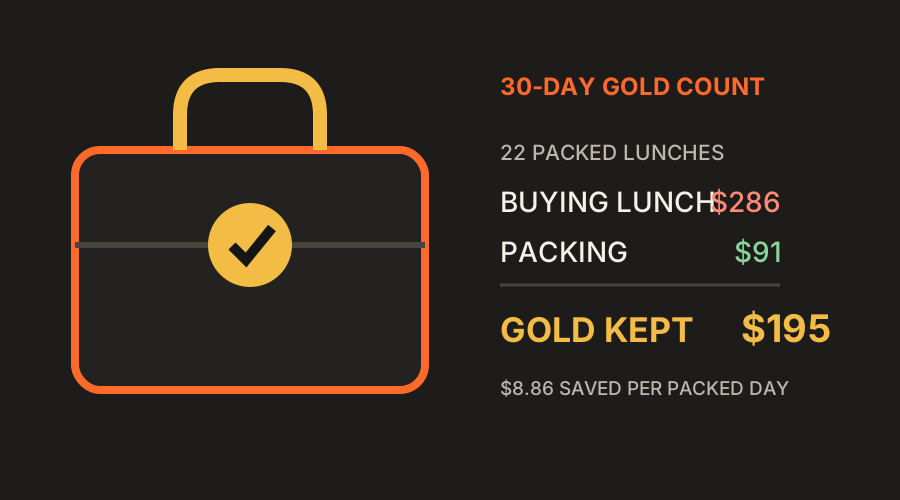
Packing 22 work lunches during July 1–30, 2026 cost $91.04, including ingredients, containers and two convenience items. Buying the usual $13 lunch would have cost $286, so the side quest kept $194.96—$8.86 per packed day—while requiring about 3 hours 20 minutes of batch prep.
“I saved $390 by never buying lunch for 30 days” would make a lively headline and terrible accounting. July 1 through July 30 contained 22 weekdays for this worker, and weekends were already home-food days. The counterfactual is 22 ordinary bought lunches, not 30.
Define the quest before shopping
The baseline came from 10 June receipts: the usual salad, sandwich or bowl averaged exactly $13 after tax and occasional tip. The July target was to pack every weekday while keeping lunches pleasant enough to repeat. Existing salt, oil and spices were valued at $3 rather than declared free.
I created a $105 lunch category in a zero-based budget on June 30. That was not the savings result; it was the spending ceiling. The setup follows the deliberate category approach described in our EveryDollar review, though a spreadsheet would have handled the count.
What the 22 lunches cost
| Lunch set | Servings | Ingredient cost | Cost each |
|---|---|---|---|
| Chickpea grain bowls | 5 | $18.40 | $3.68 |
| Chicken slaw wraps | 5 | $22.10 | $4.42 |
| Lentil soup and bread | 4 | $12.96 | $3.24 |
| Pasta, tomato and feta | 4 | $14.88 | $3.72 |
| Leftover dinner portions | 2 | $6.20 | $3.10 |
| Convenience lunches | 2 | $9.50 | $4.75 |
| Containers and pantry share | — | $7.00 | — |
| Total | 22 | $91.04 | $4.14 avg. |
Week one: remove morning decisions
On June 30, five grain bowls took 52 minutes to prepare. Each used the same base but different sauces on alternating days. Lunches one through five cost $18.40. The only temptation arrived Friday when coworkers ordered sandwiches. I ate the bowl first, then joined the walk, which preserved the social break without buying a second meal.
Week two: texture is a budget category
Chicken slaw wraps cost more at $4.42 each but traveled better and felt less repetitive. Preparation took 48 minutes. One wrap was assembled the night before rather than Sunday because tortillas become soggy; the system adapted instead of demanding purity.
A useful budget optimizes adherence, not the lowest possible unit cost. Five bland $1 lunches thrown away on Wednesday cost more than five good $4 lunches eaten. This is why our guide to choosing a budgeting tool puts behavior before feature count.
Week three: freezer armor
Four servings of lentil soup plus bread cost $12.96 and took 44 active minutes. Two portions went straight into the freezer. On July 16, a delayed train turned a normal evening into a takeout risk; the frozen serving became the next day’s lunch with no extra labor.
Week four and the two emergency slots
Pasta with tomato, spinach and feta covered four days for $14.88. Two dinner leftovers covered July 27 and 28 at an allocated cost of $3.10 each. The final two days used prepared grocery-store items costing $4.75 apiece. Those were deliberately inside the plan. A quest with no convenient fallback tends to end at the first chaotic morning.
The full gold count
The baseline was $286: 22 lunches times $13. Packed cost was $91.04, leaving $194.96. Divided across 22 days, that is $8.86 kept per lunch. Active batch-prep time totaled about 200 minutes. The crude return on active time was $58.49 per hour, though shopping and dishwashing overlapped with ordinary household work and were not separately timed.
I transferred $195 to a car-repair sinking fund on July 31, rounding the four cents down. That step prevented “saved” money from evaporating into unrelated checking activity. The $105 category also had $13.96 unspent; the transfer captured the actual baseline difference, not merely the category remainder.
What survives beyond day 30
I will not pack 100% of lunches forever. The durable version reserves one bought lunch every other Friday and packs the remaining days. At 20 packed lunches in a typical month, the same $8.86 difference is about $177.20. Even if grocery prices rise 10%, the gap stays useful.
The real unlock was a rotation of four lunch sets, two frozen portions and two accepted convenience meals. No daily recipes, no heroic Sunday, no shame when a store-made bowl saves the streak. Side quest complete; the system remains.
Food waste was included. Half a bunch of spinach spoiled and added $1.35 to the pasta set; two unused tortillas were frozen, so their cost belongs to a later meal. Counting waste makes the $4.14 average less flattering and more repeatable. It also points to the next improvement: buy loose greens when the unit-price premium is smaller than likely waste.
Frequently asked questions
Does prep time erase the savings?
In this case, 200 active minutes produced $194.96 in savings, about $58.49 per active hour. Your result depends on usual lunch price, recipes and whether prep overlaps with dinner.
How do I price leftovers fairly?
Assign the portion its ingredient cost rather than calling it free. If dinner made four portions for $12.40, one lunch portion costs $3.10.
What if coworkers use lunch for networking?
Keep selected bought lunches in the plan. Pack on ordinary desk days and spend deliberately when the meal itself has social or professional value.