
The 21-day hoard challenge
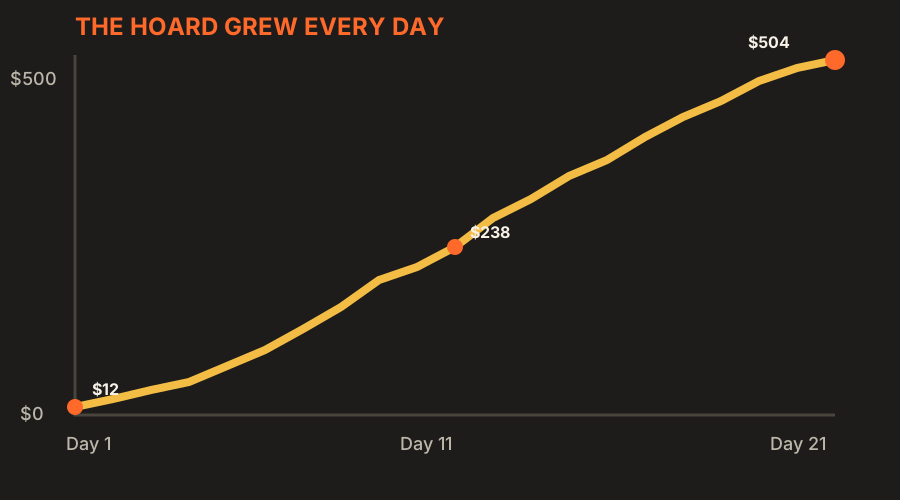
A 21-day savings sprint moved $504 into a separate account between July 6 and July 26, 2026. The winning rule was not deprivation; it was scoring one deliberate money action every day. Automatic transfers built consistency, while three larger actions supplied 58% of the final hoard.
I ran this as a household diary, not a universal prescription. My starting checking balance, rent and emergency fund stayed out of the game. The target was $420—an average of $20 a day—and every dollar had to come from a canceled purchase, lower bill, sold item or named transfer. Moving money from one everyday category to another did not count.
The rules of the sprint
On Sunday, July 5, I opened a no-fee savings bucket called “Hoard 21” and scheduled a $5 daily transfer. That guaranteed $105 only if I left it alone. A completed action earned one shield mark; beating the day’s $20 target earned a gold mark. Three no-spend days were allowed, but skipping meals, medicine or planned social commitments was not.
The game worked because the scoreboard was visible and the finish was close. Twenty-one days is long enough to encounter a grocery trip, weekend and bill cycle, but short enough that “I’ll restart next month” sounds ridiculous. Our money glossary calls this a sinking fund when the goal is known; mine was a starter repair reserve.
Days 1–7: easy coins first
July 6: I transferred $12, including the automatic $5 and $7 saved by making coffee. July 7: a pantry dinner beat a $24 delivery cart. July 8: I packed a lunch and moved $14. July 9: comparing pharmacy prices kept $9. July 10: I chose the library over a $16 ebook. The first Friday was the useful test: I still met a friend, but we walked with $4 coffees instead of ordering a $38 dinner.
On July 11, a rainy Saturday, I listed an unused keyboard for $45 and counted nothing until it sold. On July 12 I batch-cooked four lunches; only the $11 difference between the planned ingredients and usual lunch spend entered the hoard. Week one closed at $107—above the $100 checkpoint, but mostly through ordinary substitution.
Days 8–14: the middle fights back
July 13 produced only the automatic $5. I had already planned groceries and refused to invent a saving. On July 14 the keyboard sold for $40 after negotiation. July 15 added $13 from choosing a slower train. July 16 added $18 after I used a store credit before cash. July 17 was another $5 day.
The best middle action arrived July 18: I reviewed a phone bill and removed an unused $15 add-on, then counted only the first month’s saving. On July 19 I sold two books for $20. That week added $116 and brought the total to $223. Motivation dipped because the novelty had gone; the fixed daily transfer kept the chain alive without demanding a heroic idea.
Days 15–21: hunt the large pieces
July 20 added $17 from a packed lunch and delayed snack. On July 21 I canceled a $12 monthly subscription I had not opened since May. July 22 was $8 from combining errands. July 23 produced the largest single win: $126 from selling a dormant tablet. July 24 added $19 after I changed a restaurant plan to tacos at home with friends.
On July 25 I moved $34: $5 automatic, $9 from a free museum evening and $20 from a small freelance correction I could have absorbed into checking. The final day, July 26, added $65 from a returned unopened household item plus the last transfer. The account landed at $504, $84 above target.
| Days | Main actions | Added | Running total |
|---|---|---|---|
| 1–7 | Coffee, pantry dinner, library, simple meetup | $107 | $107 |
| 8–14 | Keyboard sale, transit swap, phone add-on, books | $116 | $223 |
| 15–18 | Lunches, subscription, errands, tablet sale | $163 | $386 |
| 19–21 | Home dinner, museum, return | $118 | $504 |
What actually built the hoard
Sales contributed $186, or 37% of the result. Canceled and reduced recurring costs contributed $51. Food and drink choices supplied $129. Returns, credits, transport and the freelance transfer filled the remaining $138. The daily $5 baseline appears inside those totals; it mattered more as a streak protector than as the biggest source.
The sprint did not prove I can save $504 every 21 days. I cannot repeatedly sell the same tablet. It did expose $27 in monthly costs that would otherwise continue, and it made packed lunches feel normal. Anyone selecting a tool to run the scoreboard can use our budgeting-app guide; a note and separate bank bucket also work.
Frequently asked questions
What if I cannot save $20 a day?
Set the target from your actual margin. A $3 daily floor plus one weekly action can still build $63 in 21 days. The useful mechanic is a visible action streak, not copying a stranger’s number.
Do sales count as savings?
They count here only after the item sells and the cash reaches the separate account. Sales are finite, so track them separately from repeatable monthly cuts.
Where should the challenge money go?
Use a separate no-fee savings bucket so the score cannot blur into checking. If you have urgent high-interest debt, the same challenge can send the final balance there instead.